Don't Buy the Q80 Q80A Qled Until You Read This Full Analysis
When Samsung released the Q80A QLED series, it aimed to occupy the critical mid-to-high-end territory of the television market. This is the segment where consumers are looking for a significant step up from entry-level displays but aren't quite ready to pay the premium for Neo QLED Mini-LED or OLED technology. For years, the Q80 series was known for its consistent performance, but the Q80A marked a pivot in Samsung’s engineering strategy, introducing specific panel changes and feature sets that have made it one of the most debated televisions in enthusiast circles. This analysis provides an exhaustive look at whether this television still holds up today and if it represents a wise investment for your specific home theater or gaming setup.
Buying a television is no longer just about choosing a screen size. Modern buyers care about panel types, backlight dimming zones, HDMI 2.1 bandwidth, and how well a screen handles the glare of a sun-drenched living room. The Q80A is a direct successor to the highly-acclaimed Q80T, yet it brings a different approach to contrast and viewing angles. Before committing a significant portion of your entertainment budget to this model, it is vital to understand the technical nuances that define the Q80A experience, from its ADS panel technology to its advanced gaming features.
Understanding the Core Technology: QLED and the ADS Panel
At the heart of the Q80A is Samsung’s Quantum Dot technology. This involves a layer of metallic nanocrystals that react to light by emitting precise colors. When combined with a LED backlight, the result is a "QLED" screen capable of much higher brightness and a wider color gamut than traditional LCD panels. However, the Q80A is unique because, in many of its most popular sizes, it utilizes an ADS (Advanced Dimension Switching) panel rather than the VA (Vertical Alignment) panels found in previous iterations and higher-tier models.
The shift to ADS is the single most important factor for a potential buyer to understand. ADS panels are structurally similar to IPS (In-Plane Switching) panels. Their primary strength is exceptionally wide viewing angles. This makes the Q80A an ideal candidate for wide seating arrangements where family members or guests might be viewing the screen from the side. In these scenarios, the colors remain accurate and the image does not wash out as it would on a VA panel. The compromise, however, lies in the native contrast ratio. ADS panels typically have lower contrast than VA panels, meaning blacks can appear more like dark gray when viewed in a completely dark room. To counteract this, Samsung employs a Full Array Local Dimming (FALD) system, which we will analyze in the performance section below.
Detailed Performance Analysis
HDR Performance and Brightness
High Dynamic Range (HDR) is where the Q80A truly shines. Thanks to the QLED layer and a robust backlight system, the television can achieve impressive peak brightness levels. This is crucial for "specular highlights"—the small, bright details like sunlight reflecting off water or the glow of a lightsaber—which need to pop against darker backgrounds to create a realistic image. The Q80A supports HDR10, HLG, and HDR10+, Samsung’s preferred dynamic metadata format. While it lacks Dolby Vision support, the HDR10+ performance is strong enough to satisfy most viewers.
In real-world use cases, such as watching a 4K Blu-ray of a visually dense film like Mad Max: Fury Road, the Q80A manages the bright desert highlights with ease. The image feels vibrant and energetic. Because the panel is naturally bright, it is also highly effective at resisting glare. If your living room has large windows or bright overhead lighting, the Q80A is objectively better at maintaining visibility than many OLED counterparts, which can sometimes struggle in high-ambient-light environments.
Local Dimming and Contrast
Because the ADS panel has a lower native contrast ratio, the Full Array Local Dimming system has to work overtime. Samsung has implemented a sophisticated algorithm to manage the various dimming zones behind the screen. In scenes with mixed lighting—such as a streetlamp in a dark alley—the TV attempts to dim the backlight in the dark areas while keeping the lamp bright. For the most part, Samsung’s processing is excellent, minimizing "blooming" (the halo effect around bright objects). However, critical viewers might notice some loss of shadow detail in very dark scenes as the TV tries to keep black levels looking deep. For sports, bright sitcoms, and news, this is a non-issue, but for fans of moody horror films, it is a point of consideration.
Motion Handling and Upscaling
Samsung’s Quantum Processor 4K handles the heavy lifting for motion and upscaling. The Q80A features a 120Hz native refresh rate, which is the gold standard for smooth motion. Whether you are watching a fast-paced football game or a high-speed car chase, the TV handles motion with minimal blur. The "Auto Motion Plus" settings allow for customization, though many purists will prefer to turn off the "soap opera effect" for cinematic content.
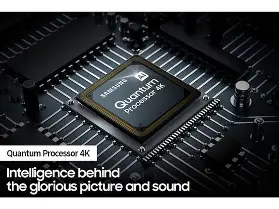
Upscaling is another area where the Q80A excels. Not all content is 4K yet; much of what we watch on cable or older streaming services is 1080p or even 720p. The AI-powered processor does a remarkable job of filling in the missing pixels, sharpening edges, and reducing digital noise without making the image look plastic or artificial. This makes the Q80A a versatile choice for users who still watch a lot of legacy media.
Shop the latest TVs & Home Theater picks on Amazon.
View Offers →The Gaming Powerhouse
One of the strongest arguments for the Q80A is its suite of gaming features. Samsung has been a leader in the "gaming TV" space, and the Q80A includes nearly everything a Next-Gen console owner could want. It features HDMI 2.1 bandwidth on Port 4, supporting 4K gaming at 120Hz. This is essential for the PlayStation 5 and Xbox Series X, allowing for incredibly fluid gameplay in titles that support high frame rates.
The inclusion of Auto Low Latency Mode (ALLM) ensures the TV automatically switches to Game Mode when a console is detected, reducing input lag to nearly imperceptible levels (often under 10ms). It also supports Variable Refresh Rate (VRR), including FreeSync Premium Pro, which eliminates screen tearing. For PC gamers, the Q80A serves as an excellent large-format monitor, especially with the Ultrawide GameView feature that allows you to shift the aspect ratio to 21:9 or 32:9 for a more immersive field of view.
Pros and Cons
- Pro: Wide Viewing Angles. The ADS panel ensures that even if you are sitting at a 45-degree angle from the screen, the colors and brightness remain consistent, making it perfect for large families or hosting parties.
- Pro: Exceptional Brightness. This TV gets bright enough to combat heavy glare, making it a "daytime-friendly" display that doesn't require blackout curtains to look good.
- Pro: Comprehensive Gaming Suite. With HDMI 2.1, 120Hz support, and VRR, this is a future-proof choice for gamers looking to maximize their console's potential.
- Pro: Tizen OS Interface. Samsung’s Smart Hub is fast, intuitive, and supports virtually every major streaming app, from Netflix and Disney+ to niche sports and workout apps.
- Con: Native Contrast. In a dark room, the blacks aren't as deep as those on VA-panel TVs or OLEDs, which may bother movie enthusiasts who frequently watch in "cinema" conditions.
- Con: No Dolby Vision. While HDR10+ is available, the lack of Dolby Vision means you won't get the absolute best out of certain streaming content that defaults to that format.
- Con: Local Dimming Behavior. Some "crushing" of blacks can occur in very dark scenes where the software tries too hard to hide the panel's natural gray tones.
Comparison: Q80A vs. Competitors
To help you understand where the Q80A sits in the current landscape, the following table compares it with the entry-level Q60 series and the premium QN90 Neo QLED series.
| Feature | Samsung Q60 Series | Samsung Q80A QLED | Samsung QN90 Series |
|---|---|---|---|
| Backlight Type | Edge-Lit LED | Full Array Local Dimming | Mini-LED (Neo QLED) |
| Refresh Rate | 60Hz | 120Hz | 120Hz / 144Hz |
| HDMI 2.1 | No | Yes (1 Port) | Yes (4 Ports) |
| Panel Type | VA (High Contrast) | ADS (Wide Angle) | VA with Wide Angle Layer |
| Peak Brightness | Moderate | High | Very High |
Buying Guide: Is the Q80A Right For You?
Deciding whether to buy the Q80A depends heavily on your room environment and your primary content consumption habits. It is not a "one size fits all" television, but for certain users, it is arguably the best value on the market.
Case 1: The Bright Living Room
If your TV is located in a room with lots of windows, the Q80A is a top-tier choice. Its ability to push high brightness levels allows it to "cut through" reflections. Many OLED TVs, while having better contrast, act like mirrors in bright rooms. The Q80A’s anti-glare properties and high luminance make it a much more practical choice for casual daytime viewing of talk shows, sports, and news.
Case 2: The Social Viewer and Sports Fan
If you often have friends over to watch the game or if your couch is perpendicular to the TV, the wide viewing angles of the Q80A are a game-changer. Standard VA-panel televisions lose color saturation as soon as you move off-center. With the Q80A, the person in the "bad seat" on the edge of the sofa still gets a vibrant, color-accurate image. The 120Hz refresh rate also ensures that the ball in a soccer match or the puck in hockey moves smoothly without trailing.
Case 3: The Dedicated Gamer
For gamers on a budget who can't stretch to the Neo QLED or OLED prices, the Q80A is the "sweet spot." You get the critical HDMI 2.1 features that allow for 4K/120fps gaming. While some lower-end TVs claim to "support" 4K, they often lack the 120Hz panel needed to actually display those frames. The Q80A delivers the full technological experience of the latest consoles.
Case 4: The Dark Room Cinema Purist
If you have a dedicated basement theater and you predominantly watch movies at night with the lights off, you might want to consider your options carefully. The lower native contrast of the ADS panel means that in a pitch-black room, the "black" bars at the top and bottom of a movie will have a slight glow. If you are a purist who demands "inky" blacks, you may prefer a VA-panel TV like the Q70 or a higher-end Neo QLED model.
Find top-rated TVs & Home Theater products at great prices.
Shop Amazon →Audio Quality and Design
Aesthetically, the Q80A is a sophisticated piece of hardware. It features a "Boundless Design" with extremely thin bezels on three sides, making the screen appear as if it is floating. The stand is a central "floating plate" design, which is highly practical because it allows the TV to fit on narrower media consoles where "feet" at the corners might hang off the edge.
Sound quality is surprisingly beefy for a modern thin TV. It utilizes Samsung’s Object Tracking Sound (OTS) technology, which uses dedicated up-firing and down-firing speakers to make the audio seem like it is following the action on screen. While it cannot replace a dedicated soundbar or a 5.1 surround system, the 60W 2.2.2 channel speakers provide much better clarity and bass than the standard 20W speakers found in cheaper models. It also supports Q-Symphony, allowing the TV speakers to work in tandem with a compatible Samsung soundbar for an even wider soundstage.
The Smart Features: Tizen OS and Connectivity
Samsung’s Tizen operating system remains one of the most polished interfaces in the industry. The "Smart Hub" bar at the bottom of the screen allows you to navigate apps without stopping the show you are currently watching. It also integrates well with SmartThings, allowing you to control your smart home devices (like lights or thermostats) directly from your TV remote.
Connectivity options are plentiful, though with one caveat. You get four HDMI ports, but only Port 4 is HDMI 2.1. If you own both a PS5 and an Xbox Series X and want to use 4K/120Hz on both simultaneously without swapping cables, you may find this limiting. However, for the majority of users with one console and perhaps a soundbar (connected via the eARC port on HDMI 3), the layout is perfectly sufficient. There are also two USB ports, an Ethernet jack, and an Optical audio out for older receivers.
Conclusion
The Samsung Q80A QLED is a television defined by its versatility. By moving to an ADS panel, Samsung intentionally traded some dark-room contrast for vastly improved viewing angles and daytime usability. This makes the Q80A a "lifestyle" champion—a TV designed to live in the center of a busy, brightly lit household rather than hidden away in a dark theater room. Its combination of high peak brightness, excellent upscaling, and a comprehensive gaming toolkit makes it one of the most well-rounded displays in its price bracket.
While film enthusiasts who prioritize black levels might find the ADS panel a point of contention, the vast majority of consumers will be more than satisfied with the vibrant, sharp, and fluid image the Q80A provides. It bridges the gap between affordable and premium, offering enough "special features" to keep it relevant for years to come. If you understand the technology and your own viewing habits, the Q80A stands as a powerful contender for your next home entertainment upgrade.