Head-to-Head: Tribit Pocketgo vs Marshall Middleton Ii (Detailed Comparison)
Portable Bluetooth speakers remain one of the most practical audio accessories for everyday life, and two compact models that often come up in conversations are the Tribit Pocketgo and the Marshall Middleton II. Both target users who want convenience without sacrificing sound, but they approach the challenge from different design and sonic philosophies. This article provides an in-depth, impartial comparison to help buyers decide which speaker better fits their real-world needs.
Introduction
Compact Bluetooth speakers are judged on a handful of consistent priorities: sound quality, portability, battery life, durability, connectivity, and value. Buyers typically consider where and how they will use the speaker — on commutes, at a desk, on trips, at small gatherings, or by the pool — and weigh that against size, robustness, and how the speaker handles different genres of music and voice content.
Tribit positions the Pocketgo as an ultra-portable, punchy option for daily carry, while Marshall’s Middleton II emphasizes heritage styling, a premium finish, and a particular tilt toward musicality with a refined midrange. The following sections analyze each model across the key dimensions that matter to most buyers and provide actionable guidance.
Tribit Pocketgo — Product Review and Analysis
Overview
The Tribit Pocketgo is designed with portability in mind. It targets listeners who want a small, lightweight speaker that can handle background music, outdoor use, and frequent transport. The Pocketgo’s compact footprint and simple control scheme make it an appealing grab-and-go speaker for everyday situations.
Sound Quality and Performance
In practical use, the Pocketgo tends to emphasize clarity and presence in the upper midrange, which helps vocals and acoustic instruments cut through in noisy environments. Bass is present and respectable for a speaker of this size, but it is intentionally limited compared to larger models; the result is a sound profile that feels balanced at low to moderate listening volumes but lacks the chesty low-end extension expected for party-level bass.
For podcasts and speech, the Pocketgo performs well — voices are intelligible and forward. For genres like acoustic, indie, or lo-fi, it produces an engaging picture. When pushed to higher volumes, the small enclosure can show compression, and distortion becomes noticeable sooner than on larger or more premium designs.
Design, Build, and Portability
The Pocketgo’s chief selling point is its portability. It typically fits in a jacket pocket or small bag and is light enough for extended handheld carry. Controls are usually minimal and intuitive, favoring one-button or a small cluster of buttons for play/pause, volume, and Bluetooth pairing.
Build materials tend toward durable plastics and rubberized accents, giving the speaker a rugged, travel-friendly feel. For buyers who plan to toss the speaker in a backpack or use it outdoors, this approach is practical.
Battery and Everyday Use
Battery life from a compact speaker like the Pocketgo is usually adequate for several hours of continuous playback at moderate volume. In everyday use—commuting, desk listening, short outings—this level of longevity is often sufficient. Charging convenience and included cables also factor into the user experience; Tribit typically includes a simple charging solution that balances cost and practicality.
Connectivity and Extras
Bluetooth pairing tends to be straightforward, and the Pocketgo supports standard connect-and-play workflows for the majority of phones and tablets. Advanced features such as multipoint pairing, app-based EQ, or multi-speaker networking are not typically the focus for this model; instead, it prioritizes reliable, fuss-free connections.
Real-World Use Cases
- Commuters who want portable music for trains or buses
- Students using a pocketable speaker in dorms or study sessions
- Outdoor walkers or cyclists who want light, unobtrusive sound
- Casual listeners who prioritize convenience over maximum loudness
Pros & Cons
- Pros: Very portable and lightweight; clear vocal presentation; rugged pocket-friendly design; easy pairing and controls.
- Cons: Limited bass extension at high volumes; fewer advanced connectivity features; small battery compared with larger portable speakers.
Marshall Middleton II — Product Review and Analysis
Overview
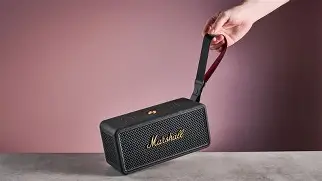
The Marshall Middleton II leans into Marshall’s legacy of guitar-amp-inspired aesthetics and a more premium tactile experience. It’s aimed at buyers who appreciate classic styling and a listening experience that leans toward musical fidelity rather than just portability. The Middleton II tends to prioritize a richer midrange and a more defined stereo image compared with ultra-compact rivals.
Discover deals on Audio & Headphones — updated daily.
Browse Now →
Sound Quality and Performance
The Middleton II often delivers a fuller, more musical presentation. Its tuning favors midrange warmth and instrument separation, making it appealing for genres like rock, jazz, and vocal-centric music. Compared with very small speakers, the Middleton II typically provides a more satisfying sense of scale and depth.
Bass performance is generally better integrated with the midrange, producing a sense of weight without overwhelming the rest of the spectrum. At higher volumes, the Middleton II usually maintains composure longer than smaller, cheaper speakers; distortion is managed more effectively, and the tonal balance stays more consistent.
Design, Build, and Portability
Marshall’s design language is immediately recognizable, with textured finishes, metal details, and larger physical controls. The Middleton II is larger and heavier than pocket-sized models, but still highly portable for day trips and travel. It tends to feel more premium in hand, which aligns with buyers who value tactile quality and styling.
Battery and Everyday Use
Battery life on the Middleton II is positioned for all-day use in typical scenarios such as office background music or extended outdoor sessions. Charging is straightforward, and the unit’s endurance supports longer listening sessions without constant recharging. For users who prioritize longer playback and fewer interruptions, this is an advantage.
Connectivity and Extras
The Middleton II often includes enhanced connectivity options compared with entry-level speakers, such as multipoint Bluetooth pairing or a standby of basic auxiliary input support. Physical knobs and switches offer a hands-on control experience that some buyers prefer over tap controls. While it may not include extensive smart features, its connectivity is solid and reliable for everyday pairings.
Real-World Use Cases
- Home listeners who want a compact but musical speaker for living rooms or kitchens
- Small gatherings where quality and presentation matter more than sheer volume
- Viewers who want improved dialogue and soundtrack clarity when streaming video
- Buyers who value physical controls and a premium finish
Pros & Cons
- Pros: Richer, more musical sound with a warm midrange; premium build and tactile controls; better composure at higher volumes.
- Cons: Larger size and higher weight than pocketable models; typically higher price point; less ideal for strictly ultralight travel.
Side-by-Side Comparison Table
| Category | Tribit Pocketgo | Marshall Middleton II |
|---|---|---|
| Design & Finish | Compact, rugged, travel-focused; minimal controls | Classic Marshall styling, textured finish, larger physical controls |
| Sound Signature | Clear upper mids and vocals; leaner bass | Warm midrange, fuller soundstage, more balanced bass |
| Portability | Extremely pocketable and lightweight | Portable but larger and heavier; better for bags |
| Battery for Everyday Use | Good for short-to-moderate sessions; easy to recharge | Longer endurance suited to full-day listening |
| Durability | Rugged plastics and rubberized accents for travel | Solid build with premium materials; fewer shock-optimized features |
| Connectivity | Straightforward Bluetooth pairing; minimal extras | Reliable Bluetooth with more robust control layout; possible multipoint |
| Best Uses | Commuting, outdoor walks, pocket-carry, casual use | Home listening, small gatherings, music-focused use, premium look |
| Value Proposition | High value for portability and everyday convenience | High value for sonic quality and premium design |
How Each Speaker Performs in Real-World Scenarios
Travel and Commuting
For travel and commuting, the Tribit Pocketgo’s compact dimensions and light weight make it the more practical choice. It slips into small bags and pockets and is less likely to be a burden on a longer journey. The Middleton II can travel but is better suited to being carried in a daypack or checked luggage when space and weight permit.
Outdoor and Social Situations
At small outdoor gatherings or picnics, both speakers can serve the purpose, but they do so differently. The Pocketgo’s portable nature means it can go almost anywhere, while the Middleton II’s fuller presentation will offer a more satisfying listening experience for multiple listeners. If the priority is filling a space with more convincing sound, the Middleton II has the edge.
Work and Home Use
For desks, kitchens, or bedrooms, the Middleton II often feels more at home due to its richer midrange and refined finishes. It provides pleasant background music without demanding high volumes. The Pocketgo remains a solid choice for listeners who prefer something unobtrusive and easily moved from room to room.
Buying Guide: What to Consider Before Choosing
Choosing between the Tribit Pocketgo and Marshall Middleton II comes down to a buyer’s priorities. The following checklist clarifies the essential trade-offs and helps align product strengths with use cases.
1. Portability vs. Sound Quality
If absolute portability is paramount — fitting into a pocket, minimal weight, easy one-handed carry — the Tribit Pocketgo is optimized for that lifestyle. If sound quality and a fuller listening experience are higher priorities, the Marshall Middleton II will be more satisfying.
Looking for the best Audio & Headphones deals on Amazon?
View Offers →2. Listening Habits
Consider what the speaker will play most: spoken content, acoustic music, electronic bass-heavy tracks, or a mixture. For speech and light music on the go, the Pocketgo’s clarity is excellent. For music lovers who value separation, warmth, and depth, the Middleton II’s tuning is preferable.
3. Battery Life Needs
Assess typical session length. For short commutes and casual use between charges, the Pocketgo suffices. For longer playlists, day-long outings, or situations where recharging is inconvenient, the Middleton II’s extended endurance is beneficial.
4. Durability and Weather Resistance
Buyers who plan to use a speaker outdoors frequently should check for water or dust resistance and how rugged the exterior finish feels. The Pocketgo’s travel-first build often handles rougher handling and light exposure better, while the Middleton II’s premium finishes require more mindful handling.
5. Controls and Usability
Physical knobs and switches offer immediacy and tactile feedback. Those who prefer simple, tactile interactions may favor the Middleton II, while users who want minimal controls and a compact layout might prefer the Pocketgo.
6. Aesthetics and Brand Preference
Style matters to many buyers. Marshall’s classic aesthetic suits those wanting a retro, premium look, whereas Tribit’s design emphasizes functional minimalism. Brand reputation for support and longevity may also influence the decision.
7. Value and Price Sensitivity
Decide how much is reasonable to spend for added build quality and sonic refinement. If budget is tight, the Pocketgo often delivers a compelling mix of function and affordability. If a buyer is willing to invest more in presentation and musical performance, the Middleton II is aligned with that priority.
Final Thoughts and Conclusion
Both the Tribit Pocketgo and the Marshall Middleton II have clear, defensible positions in the portable speaker market. The Pocketgo excels at ultra-portability, straightforward usability, and delivering satisfyingly clear vocals for its size — a smart choice for on-the-go listeners who prioritize convenience. The Middleton II prioritizes a more refined listening experience with richer mids and a premium build, making it a better match for home listening, small gatherings, and buyers who value tactile controls and style.
Ultimately, the right speaker depends on how it will be used daily. For commuters, travelers, and those who place portability at the top of the list, the Tribit Pocketgo is likely the better fit. For listeners seeking musicality, build quality, and a more immersive soundstage in a still-portable package, the Marshall Middleton II is the more compelling option. Both deliver dependable wireless audio in slightly different ways, and understanding those differences helps buyers choose the model that aligns with their practical needs and listening preferences.