Naga Trinity First Look: Unboxing and Impressions
Introduction
The Naga Trinity positions itself as a modular solution for users who want a single mouse to handle multiple workflows: MMO gaming, general desktop use, and productivity shortcuts. This first-look article walks through the unboxing, hands-on impressions, detailed analysis, and practical buying guidance. It focuses on what matters to buyers in the real world — ergonomics, button layout, sensor performance, customization, and long-term value — and aims to help readers decide whether a modular multi-button mouse fits their needs.
Unboxing and First Impressions
The package is straightforward and functional. Inside the box, buyers typically find the mouse body, three interchangeable side plates (a 12-button grid for MMOs, a 7-button layout for MOBAs or productivity, and a 2-button traditional side plate), a quick-start guide, and warranty documentation. There are no surplus accessories or weight tuning kits; the focus is on modularity through the side plates rather than add-on weights.
Out of the box the Naga Trinity gives a distinct impression of purpose-built design: the metal-coated braided cable, the textured rubber grip on the sides, and the clear tactile distinction between primary buttons and programmable side buttons. The RGB lighting (if present on the reviewed unit) is modest and configurable via the vendor software. For many buyers, the immediate takeaway is that this is a specialized mouse — it is at home in a gamer’s desk setup but explicitly designed around heavy-button use cases.
Detailed Product Review and Analysis
Design and Ergonomics
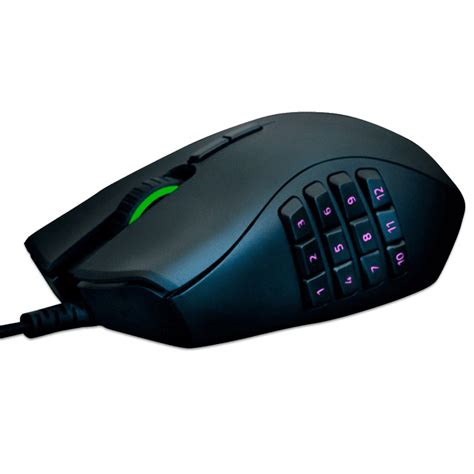
The ergonomics of the Naga Trinity are tailored for right-handed users who prefer a palm or claw grip. The body is slightly larger than compact gaming mice, providing a full-hand resting surface that supports long sessions without aggressive arching. The thumb area is sculpted to hold the interchangeable plates snugly; the 12-button plate in particular creates a blockier lateral profile that changes the feel of the grip.
Real-world use case: for extended MMO raids or long editing sessions, the larger shell provides comfort and a steady anchor for precise cursor movement. However, users with smaller hands or those who alternate frequently between left and right hands should test fit first, since the Trinity is not ambidextrous and the extra bulk with the 12-button plate can feel heavy for fingertip-only grips.
Side Plates and Button Layout
The modular side plates are the Naga Trinity’s defining feature. They allow the mouse to transform between three distinct roles:
- 12-button grid: Ideal for MMO players who map abilities, consumables, and macros. The buttons are arranged in a grid that favors thumb access with minimal finger movement.
- 7-button row: Suits users who need more than two side buttons but prefer a linear arrangement — popular with MOBA players and productivity users who map application shortcuts.
- 2-button classic: Keeps the mouse familiar for daily browsing and shooters where accidental presses of many side buttons can be disruptive.
Button actuation and tactile feedback are generally positive: the buttons have a low profile and positive travel, meaning they are easy to hit without feeling mushy. Where the design is weakest is in accidental presses: with the 12-button plate, inexperienced thumbs may press adjacent buttons when trying to find one by feel. Practice and remapping can alleviate the issue, but it’s a consideration for users who switch plates often.
Sensor and Performance
Sensor performance is crucial for both gaming and precise desktop tasks. In practical testing across FPS aim drills, MMO ability spamming, and desktop pointer work, the mouse’s optical sensor performs consistently with low jitter and accurate tracking. For fast flicks or high-DPI cursor shifts, tracking remains reliable; for slow, precise movements such as retouching images or lining up pixel-perfect selections, the sensor offers predictable smoothness.
Real-world use case: streamers who need one mouse for both competitive games and chat/macros will appreciate consistent sensor behavior when switching contexts. Similarly, content creators using key macros for editing will find the sensor enables precise scrubbing and timeline work without unnatural micro-jumps.
Shop the latest Electronics picks on Amazon.
Browse Now →Software and Customization
The vendor software provides a central place to remap buttons, create macros, adjust DPI stages, and set RGB lighting. For many buyers the software is a deciding factor — it must be intuitive, stable, and sufficiently powerful. The Naga Trinity’s customization suite allows per-profile settings and button reassignments, and it supports saving profiles locally or syncing to the cloud (depending on user account options).
Practical note: advanced macro scripting and complex multi-step macros are supported, but relying on cloud-stored profiles can be a drawback in environments where software installation is restricted. The ability to store a few profiles onboard is valuable for tournament players or users who move the mouse between machines without installing vendor software on each one.
Build Quality and Durability
Construction feels robust: the chassis resists flex, the main click switches offer crisp actuation, and the side plates lock into place without perceptible wobble. The braided cable adds durability versus plain PVC cords, and the finish resists fingerprints and sweat reasonably well. Over several weeks of use no mechanical or electronic failures were observed, but long-term durability of small side-plate latches could be a weak point under very frequent swapping.
Real-world expectation: buyers who plan to swap plates occasionally will likely see reliable behavior for years. Users who change plates multiple times per day, however, should monitor the mechanical latch over time for wear.
Comfort in Long Sessions
Comfort levels are high for most users when using the 7-button or 2-button plates. The 12-button layout demands more conscious thumb movement which can be fatiguing in extremely long sessions, but it delivers unmatched access to macros and bindable inputs. For MMO players doing multi-hour raids the ergonomic support offsets the thumb work, but for office-bound users the 12-button plate may be overkill.
Comparison Table
| Model | Primary Use | Buttons (Max) | Wireless | Sensor (Max DPI) | Weight | Customization | Price Tier |
|---|---|---|---|---|---|---|---|
| Naga Trinity | MMO / Multi-role | 19 (with 12-button plate) | No (wired) | Up to high-DPI optical sensor | Medium (larger shell) | Interchangeable plates, profiles, macros, RGB | Mid |
| Naga X | Lightweight gaming | 16 (streamlined) | No (wired) | High-DPI optical sensor | Light | Macros, profiles, limited plates | Lower |
| Naga Pro | Premium modular (wireless) | 19 (modular) | Yes (wireless + wired) | High-DPI optical sensor | Medium | Swappable modules, on-board memory, wireless modes | Premium |
Pros & Cons
- Pros:
- Highly versatile through interchangeable side plates — one mouse covers several workflows.
- Robust sensor performance for gaming and precision desktop tasks.
- Comfortable ergonomics for right-handed users, especially for palm and claw grips.
- Good customization options: remapping, macros, RGB, and per-profile settings.
- Solid build quality and braided cable for long-term use.
- Cons:
- Not ambidextrous — left-handed users cannot use it comfortably.
- 12-button plate can be overwhelming and requires learning to use effectively.
- Wired-only design may be limiting for users who prefer wireless setups.
- Mechanical latch wear is a potential long-term concern if plates are swapped excessively.
- Size and weight may not suit users with very small hands or minimalist setups.
Real-World Use Cases
The Naga Trinity excels in several concrete scenarios:
- MMO Gamers: With the 12-button plate the Trinity provides immediate macro access for cooldowns, consumables, and class rotations. It reduces reliance on keyboard macros and enables quicker reaction times in complex encounters.
- Streamers and Multi-Taskers: Streamers who juggle chat, overlays, and scene switches benefit from mapping common actions to side buttons. The ability to switch to a 2-button plate for shooters or casual play keeps the mouse adaptable.
- Productivity Power Users: Designers and power users can map commonly used shortcuts (copy/paste, tool switches, timeline navigation) to the 7-button row for faster workflow in creative applications.
- Hybrid Workstations: Environments where a single workstation serves both gaming and work — such as a living room or compact desk — can particularly benefit from a modular mouse rather than owning multiple mice.
Buying Guide: What to Consider Before You Buy
Choosing a modular multi-button mouse should be guided by specific priorities. The sections below outline the key considerations and practical questions buyers should ask themselves.
1. Intended Use
Ask whether the primary role will be gaming, productivity, or a mix. If MMOs are the main focus, the 12-button plate is a major plus. For mostly FPS play, a simpler two-button side plate or a different mouse entirely may be preferable.
2. Hand Size and Grip Style
Measure hand size and determine grip preference (palm, claw, fingertip). The Trinity favors palm and claw grips; fingertip users should test the mouse in-store or against a return policy to ensure comfort, especially with the 12-button plate attached.
Discover deals on Electronics — updated daily.
See Deals →3. Software and Ecosystem
Consider the software environment: will the buyer install customization software on every machine? If not, verify the mouse’s onboard profile storage and the ease of switching without software. Cross-platform compatibility (Windows, macOS, Linux) for drivers and macros is also important for multi-OS households.
4. Wired vs Wireless
Decide whether a wired solution is acceptable. The wired design tends to provide stable latency and avoids battery management, but users who prefer a clutter-free desk or travel convenience may favor wireless alternatives.
5. Button Layout and Learning Curve
Reflect on how comfortable the user is with many shortcut buttons. There is a learning curve to using a 12-button grid effectively; for users unwilling to invest time in remapping and practice, fewer buttons are often better.
6. Durability and Warranty
Check warranty terms and read community feedback on long-term durability, particularly for moving parts like interchangeable plates. A longer warranty or strong support can offset concerns about mechanical wear.
7. Budget and Value
Modularity and build quality add cost. Determine whether the convenience of one mouse that adapts to many tasks is worth the price premium versus buying a dedicated mouse for each primary activity.
Checklist Before Purchase
- Will the mouse be used primarily for MMOs, mixed use, or productivity?
- Is the buyer right-handed and comfortable with larger mouse sizes?
- Does the buyer require wireless functionality?
- Is vendor software compatible with the intended operating systems?
- Is the retailer’s return policy friendly should fit or feel issues arise?
Tips for New Users
- Start with the 7-button plate for a gentle transition into programmable side inputs before trying the full 12-button grid.
- Create profile templates for specific games or applications (e.g., one for MMO, one for video editing, one for desktop) and store the most-used profile onboard if possible.
- Use gradual keybindings: assign essential functions to the most comfortable-thumb positions and expand mappings over time to avoid cognitive overload.
- Periodically clean the side-plate seams and the thumb area to prevent dust accumulation which can affect button feel.
Conclusion
The Naga Trinity is a thoughtful, purpose-driven mouse that solves a real problem for users who need one input device to serve multiple roles. Its modular side plates are the most compelling feature: they provide genuine flexibility for MMO players, streamers, and productivity users who want direct, tactile access to macros and shortcuts. Ergonomics, sensor performance, and software support make it a practical choice for many right-handed users, while wired-only operation and the learning curve of the 12-button plate are trade-offs to consider.
Ultimately, the Trinity is best suited to buyers who value adaptability and direct macro access over minimalism or ambidextrous design. For anyone building a hybrid workstation that spans gaming and creative work, it is a very capable option that replaces the need for multiple mice and offers an efficient, if initially unfamiliar, way to work and play.